Success and Failure in Traditional Catholic Leadership
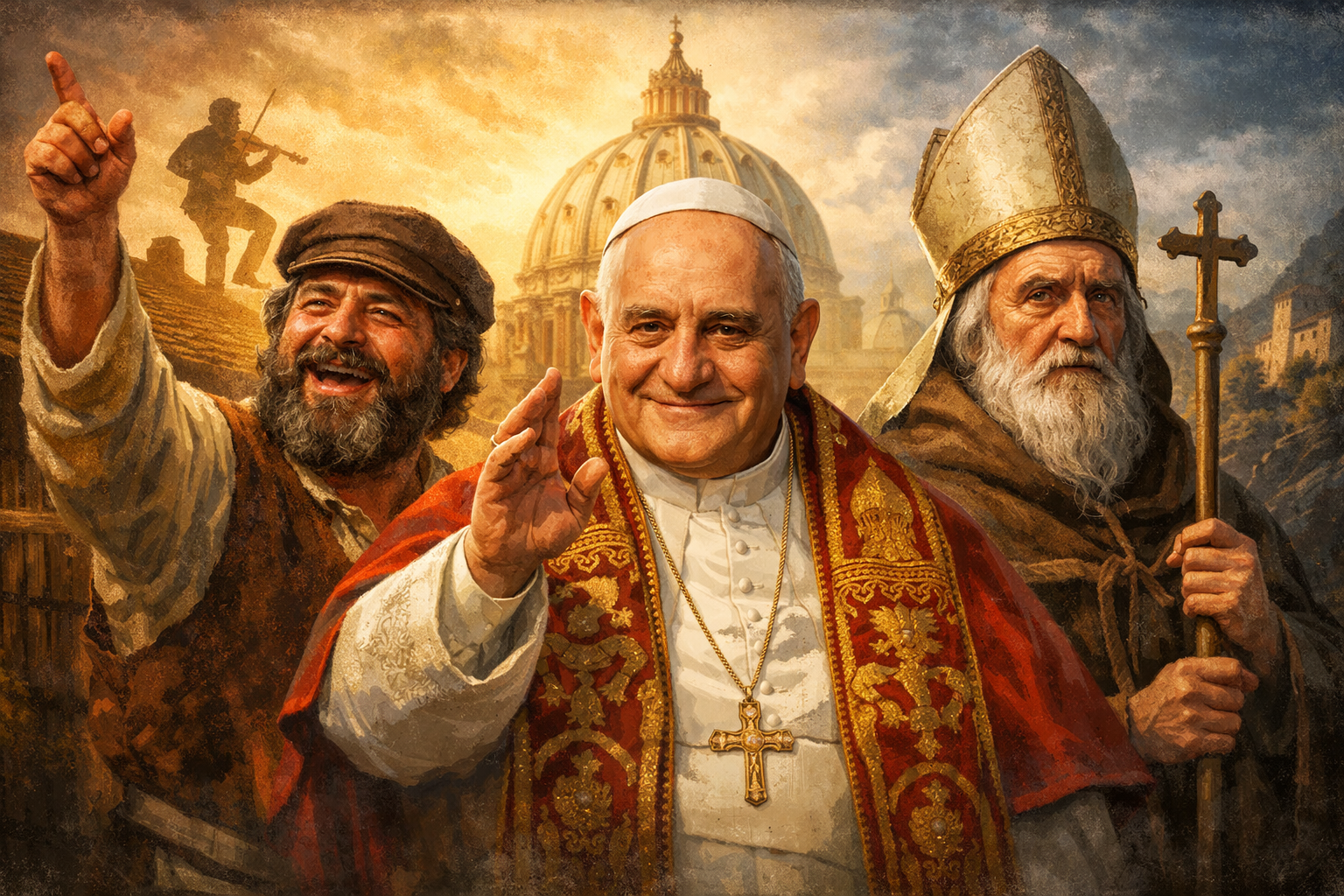
“Tradition! Tradition!” Tevye shouts in Fiddler on the Roof, invoking the religious and cultural code that keeps his world oriented on a traditional Jewish axis. “Because of our traditions, everyone knows who he is and what God expects him to do” (Jewison, 1971). In a similar way, Garry Wills (1995) uses the category of the Traditional leader to describe a style of leadership that is “stuck between” Charismatic and Legal-rational forms of Max Weber’s three social structures of authority, where custom, ritual, and ancient continuity coalesce into a source for a leader’s legitimacy. Wills points to religion as the “only… area where traditional leadership is still honored..” and connects the idea of absolute divine demands to a traditional social order where “there can be no bargaining with Him…” (p. 132)
In chapter 8, he compares Pope John XXIII with Pope Celestine V as contrasting examples of traditional leadership within the Roman Catholic Church. In this reflection, I will explore how John XXIII effectively employed his skills and resources as a traditional leader to align his office, followers, and goals with the needs of the modern world, while the even more pious Celestine V failed to translate tradition into an enduring papal legacy.
Background of Pope John XXIII
Born Angelo Roncalli in 1881, the future Pope John XXIII had all the marks of a Catholic traditionalist: he was devoted to Trent’s St. Charles Borromeo, “delighted in ecclesiastical Latin,” and “believed more deeply…” in the “traditional doctrines like the divine inspiration of the church” (p. 140). Yet it would be this Pope who would convene the Second Vatican Council and usher in the most sweeping cultural upheaval in the history of the Roman Church. According to Wills, Pope John’s tools also reflected his traditional leadership style. He revives special papal letters called encyclicals that were once popular in antiquity, but here allowed the Pope to share his vision for the church beyond the Vatican and speak to a global audience on contemporary political and social issues.
While the 16th-century Council of Trent was a triumph for the Church’s Counter-Reformation forces and firmly entrenched traditional doctrine in canon and dogma, earlier councils had sometimes served as a check on papal authority. As Wills notes, “later, conciliarism was a movement used against some popes” (p. 140). Although he died in 1963 after leading the council through only one session, Pope John was able to use these traditional levers to successfully lead the church through reform and renewal “back to the origins of the Christian tradition” (p. 144).
Background of Pope Celestine V
Celestine V, the 13th-century ascetic elected during an ecclesial crisis, was long remembered as the only pope to have resigned. Recently in 2013, Pope Benedict XVI snatched from him this unique accolade and all that remains of Celestine’s fragile legacy is the biting critique of the poet Dante who “called him a coward” (p. 146). A vacancy on the papal throne had led to a two-year stalemate between the Colonna and Orsini families, “who controlled it…” and “refused to let the other’s man take a turn in office” (p. 147).
The elderly hermit Pietro was elected to break the deadlock, with all parties hoping that they could control the newly enthroned Celestine. His papacy proved disastrous and his traditionalist attributes were not enough to make up for his lack of diplomatic skills and political judgement. Ultimately, Celestine’s leadership was misaligned with the needs of the institution, and his own ascetic tools were insufficient for the demands of papal governance. In contrast to Pope John, Wills concludes, “Celestine stands as proof that even holiness can be an earthly bane” (p. 147).
Traditional Leadership and Its Paradox
These two popes reveal that the model of the Traditional Leader requires more than an affection for the ceremonies, traditions, and rites of the church. As Wills observes, traditional leadership contains a built-in paradox: “if [leadership] relies only on tradition, what is handed down becomes something different…” (p. 143).
The transmission of tradition from one generation to the next requires leaders who can adapt the first principles of that faith or cultural identity while interpreting it in ways that meet contemporary needs and follower expectations. Contemporary leaders with traditional leadership styles must negotiate aspects of their own tradition to ensure it is able to dynamically adapt its first principles with its constituent communities. “Pope John knew,” writes Wills, “that the Church must always be in the process of renewal to get back to its original inspiration.” (p. 144)
Amazon Link: Wills, G. (1994). Certain Trumpets: The Call of Leaders. Simon & Schuster.
Leave a Reply