Nobody ordains himself
Every few weeks I get a version of the same email. I think God is calling me to the priesthood. Where do I start?
It’s a good question. The instinct underneath it usually isn’t.
Most of American Christianity treats a call as a private certainty. You feel it, you announce it, you find a platform, and the church’s job is to get out of your way. Anyone who tests it is quenching the Spirit.
Anglicanism answers differently.
He brings a claim of a call to the church, and the church tests it: slowly, in public, through men who have authority over him and no particular reason to flatter him. The ordinal asks the candidate whether he thinks in his heart that he is truly called according to the will of our Lord Jesus Christ and the order of this Church.
So I’m not usually in a hurry when a man tells me he’s called, and he shouldn’t be either.
The ordered path
The process is old and unglamorous. Details vary by jurisdiction and diocese, and in the Reformed Episcopal Church the particulars belong to the canons and to your bishop rather than to a blog post. But the sequence runs like this.
- Be a communicant where you are. Baptized, confirmed, and if you haven’t been confirmed, that comes first. Ordination begins in a congregation, under a priest who knows you, has watched you serve, and will be asked to vouch for you. If you aren’t planted somewhere, you haven’t begun. You’re shopping.
- Serve where you can be watched. Men who may be headed toward orders usually start as lay readers and chalice bearers. Dr. Rutt is candid about why. It lets the clergy see how a man speaks in public, whether he can take instruction, etc.
- Aspirancy. An aspirant is a man who isn’t sure yet. The question the REC puts to him is plain: do you sense a call from the Holy Spirit to serve the church in ordained ministry?
- Postulancy. The bishop admits you as a postulant and discernment becomes formal. You are the bishop’s postulant, not your rector’s and not your dean’s. You report to the bishops quarterly in the Ember seasons, and your formation goes before the diocesan standing committee.
- Study. Postulants begin coursework: Cranmer Theological House for most REC men, the Reformed Episcopal Seminary, or another program your bishop and the seminary dean approve. Scripture, doctrine, Church history, the Prayer Book, pastoral theology, the languages. Though formation isn’t only coursework. It’s also learning to say the Offices every day and serving in the local parish.
- Examination. Men appointed for the job will examine you, in writing and face to face, and you can fail.
- The diaconate. You’re ordained deacon first, and you serve as one.
- The presbyterate. When the bishop is satisfied, in his own time rather than yours, you are ordained priest, with the laying on of hands by the bishop and the presbyters present.
Nearly every stage is a judgment somebody else makes about you: your rector, your dean, a standing committee, your bishop. And it moves on the church’s clock. Dr. Rutt is quick to say that postulancy needn’t be prolonged, and he means it, but he won’t promise any man a date.
My conversation with Dr. Steven Rutt
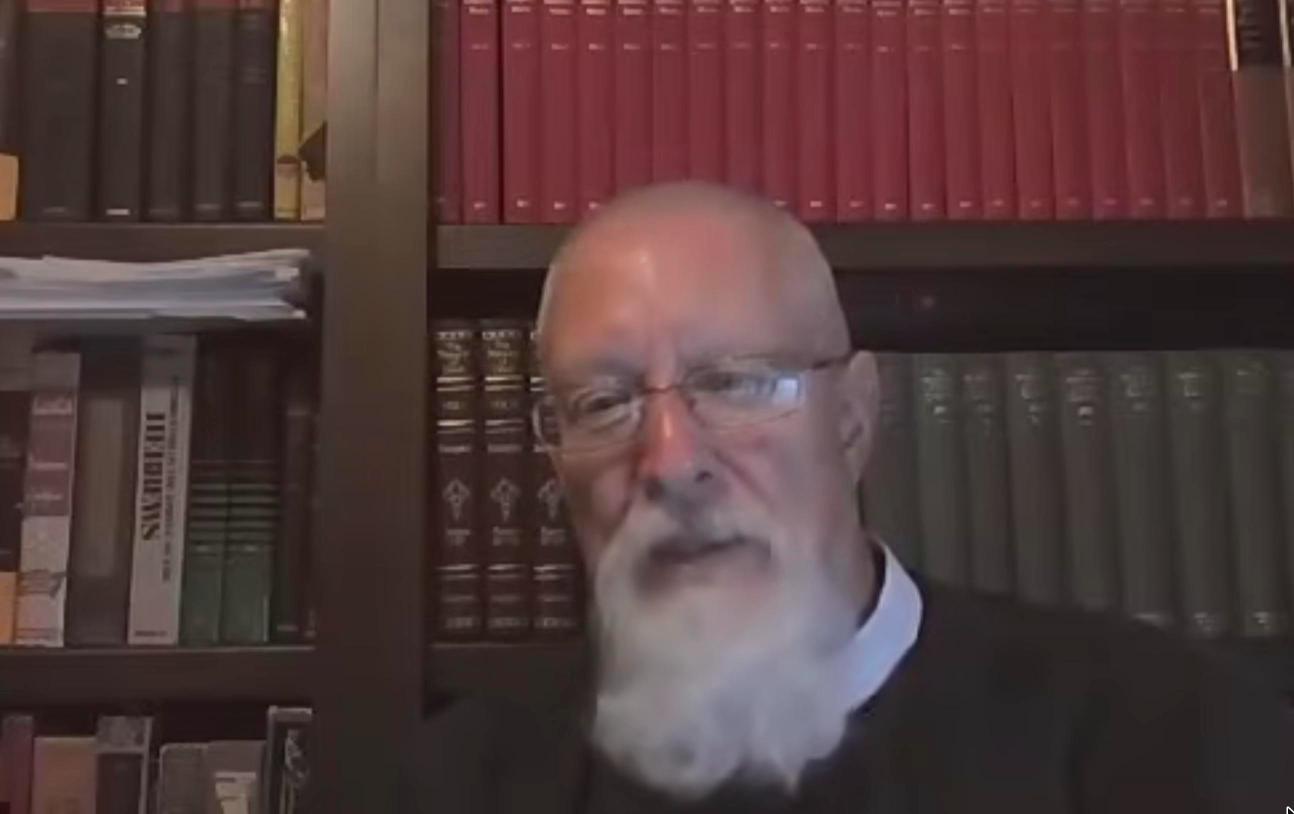
So rather than keep answering this one email at a time, I sat down with our Dean to create a video.
The Very Rev. Dr. Steven Rutt is a presbyter of the Reformed Episcopal Church and Dean of our Western Deanery. He is Professor of Biblical Studies, Worldview, and Culture at Arizona Christian University, where he has taught for thirteen years. His doctorate is from Lancaster, and he wrote two volumes on Roland Allen, Roland Allen: A Missionary Life and Roland Allen: A Theology of Mission (Lutterworth, 2018).
He’s been in ministry since 1976: a pastor, church planter, missionary and teacher across fourteen countries. He has examined candidates and he has formed them. When he says a man is ready, or isn’t, it isn’t a guess.
His own road into Anglican orders took about twenty years, and he didn’t spend them waiting for a feeling to get stronger.
In the early 1980s he was teaching at a Bible college in New Zealand, mid-twenties, out of a charismatic background, and he spent a week of classes making sport of the Anglican Church. At the end of it a student named Edwin Coates handed him the 1662 Prayer Book he’d been given at his confirmation in 1962 and told him: you’ve convinced me not to be an Anglican. Rutt took it home as a trophy. He’d pull it off the shelf now and then to poke fun at it. Then one day he decided to be fair to it, read through the order for Morning Prayer, and thought, this is good. This is actually great. Within a few weeks he was praying the Office, and he kept praying it for the next twenty years while serving in charismatic and Reformed churches. A closet Anglican, as he puts it.
He came into the REC in 2001. He and his wife sat through a synod, looked at each other, and thought these are our people. Men who homeschooled or sent their children to classical schools, who thought the way they thought, who were optimistic about the kingdom.
By then he had twenty-five years of ministry behind him and had planted churches and campus ministries on two continents. The church examined him anyway. A written exam, then an oral one in Phoenix, with a man holding an Oxford doctorate on the panel. Only after he passed did Bishop Royal Grote regularize his orders, and he was priested on 12 October 2002.
What we cover
- 02:30 — A boy at Moody Bible Institute hearing a Reformed Episcopal bishop preach
- 08:22 — The Prayer Book handed to him as proof he’d talked a man out of Anglicanism
- 13:00 — Written and oral examination before the REC would regularize his orders
- 17:46 — Aspirant, postulant, deacon, priest: the actual sequence
- 20:11 — Bishop Sutton’s rule for postulants and deacons, seen and not heard
- 24:38 — The lawyer with an Oxford master’s who vacuums the parish hall
- 29:58 — Cranmer Theological House: evening courses, weekend modules, a new Arizona cohort
- 36:45 — Ember reports, and why you’re the bishop’s postulant rather than your rector’s
- 40:37 — Why he interviews the wife, and what he tells a man whose wife isn’t ready
- 48:31 — The Western Deanery Clericus, 16–18 February 2027 in Carefree, Arizona
Seen and not heard
Bishop Sutton has a standing policy, and Dr. Rutt repeats it without embarrassment. Through postulancy and the diaconate, a man is to be seen and not heard. The bishops aren’t especially interested yet in what he thinks. They want to know whether he’s a servant.
The illustration he gave is the one I’d hand to any man who writes me. A lawyer turned up at his parish. Raised in the Episcopal Church, already pursuing orders there, a master’s from Oxford, tutored by some of the finest theologians in the field, and then told by that church that he was too conservative. Pro-life, and unwilling to affirm women’s ordination. They cancelled everything. He arrived at St. Andrew’s with more degrees than anyone in the diocese, and after a couple of months Rutt took him aside and asked whether the call was still there. He also told him not to answer yet. The man came back and said it had never left him.
He’s a postulant now. What does the diocese have him doing? Setting up chairs. Wiping down tables and vacuuming after the parish meal on Sunday. Rutt reports to the bishop on how he’s taking it, including whether he bucks against any of it.
None of that is a waste of an Oxford education. It’s how the church finds out what a man is made of before handing him the cure of souls.
You are the bishop’s postulant
Dr. Rutt makes this correction early, and more than once. A postulant doesn’t belong to his priest or to his dean. He’s the bishop’s postulant. Quarterly, in the Ember seasons, he reports to the bishops: what he’s read, what he’s been assigned, what he preached and what he learned from the text. Our bishops answer those reports. He notes that isn’t everyone’s experience, and he has friends elsewhere who filed Ember reports for years and never heard a word back.
And none of it is decided by one man. Postulants, incoming clergy and new missions all go before the diocesan standing committee, which includes bishops, deans, canons and laymen. It exists so that a plausible man with a well-placed advocate can’t simply be waved through. Rutt sits on it. He says the REC is good at screening, and he doesn’t apologize for saying so.
The call includes your household
The REC’s posture, in his words: you’re the priest of your home, you’re Abraham and your wife is Sarah, and the household travels together. He has practiced it. His children went with him and his wife into the countries where they served.
So when he interviews a man about holy orders, he interviews the wife too, and asks her the same questions. If she isn’t on board, his counsel to the man is to wait. Not to talk her into it, and not to work around her. Wait until she can say yes herself. His reason is worth hearing before ordination rather than after. The pressure of a cure falls on the wife as well, and when someone lays into her husband she will rise to his defense, and she has to know how to do that graciously.
They act on it, too. One of their postulants is on leave as we speak. A new baby, and the diocese told him to stop taking classes for a while. When he’s ready to start again, Rutt will talk with him and Mrs. Rutt will join the call to talk with his wife. She’s very good at it, he says. Fifty-one years of marriage next month gives a man some standing on the subject.
Where you will actually study
For most men in the REC that means Cranmer Theological House, and it’s more flexible than men assume.
- Online courses, one evening a week. Rutt teaches Old Testament introduction and evangelism and missions.
- Weekend modules. Friday afternoon and evening, all day Saturday, sometimes an hour or two on Sunday. A new Cranmer cohort starts in February on the campus of Arizona Christian University, where he teaches, and Bishop Charlie Camlin opens it with a course on the Thirty-Nine Articles. If you’re on the West Coast, Phoenix is a good deal closer than Dallas.
- Residential study at the Reformed Episcopal Seminary in Pennsylvania, where the Cummins Scholarship covers tuition for residential students. You pay room and board.
- Credits you already hold. The REC has a close relationship with Nashotah House and transfers aren’t a problem. Even a man who arrives with an M.Div. is usually asked only for what he needs in order to know how things are done in the REC. The seminary dean, Bishop Camlin, and the bishops make that call. You don’t.
A word about money, because it stops men it shouldn’t. Cranmer is among the most reasonable seminaries you’ll find. You can audit courses before signing your life over to a degree. And our parish keeps funds set aside to help with tuition, so if you’re at Saint Paul’s and cost is the obstacle, come and see me.
One more thing he said that governs all of it. The REC is doxological. Theology and ministry belong together, and we are churchmen. A man who shows up with a doctorate and isn’t a churchman will be told to serve in a parish until he becomes one. Cranmer’s professors are priests with cures: rectors, assistants, men planting missions. Nobody there is looking for an academic who isn’t a pastor.
What to do this month
If you’re the man writing that email, don’t wait on a seminary catalog. Do these things.
- Join a parish and stay there. Not as an attender with opinions. As a communicant who shows up, gives, serves and submits. Three years in one pew under one priest will teach you more about the ministry than three years of podcasts.
- Tell your rector, then let him lead. Say plainly that you believe you may be called, and ask him to help you test it.
- Pray the Daily Office. Morning and Evening Prayer, every day, out of the Prayer Book, whether or not anyone sees it.
- Fix your house before you ask for a cure. A wife who isn’t with you, children who are unruled, debts you can’t explain.
- Learn to work. Take the unglamorous jobs in your parish, the ones with no title and no audience.
- Start the languages now. Greek first, then Hebrew and enough Latin to read the tradition. You will never again have as much free time as you have today.
- Get yourself in the room. Go where the clergy are: the Clericus, synod, a Cranmer weekend module. Most discernment happens across a dinner table.
- Expect to be told no, or not yet. Take it as the church’s care for you rather than an obstacle to route around. A man who shops for a bishop until he finds one who’ll say yes has already told you what kind of priest he’d be.
The church needs priests
None of this is meant to discourage you. We need men, badly. There are parishes waiting on clergy, missions that could be planted, and towns across this country with no faithful Anglican witness in them at all. The harvest is plentiful and the labourers are few, and our Lord told us what to do about that.
But the men who’ll be useful in that work are the ones who let the church form them first. The office is older than you, larger than your sense of calling, and it will outlast your enthusiasm. Submit to the order and the order will make something of you.
If you’d like to meet us before you decide anything, come to the Western Deanery Clericus: 16–18 February 2027, at the Spirit in the Desert retreat center in Carefree, Arizona. Teaching sessions, Holy Communion, a high evensong, meals together. The diocese underwrites part of the cost and donors usually bring it down further. In the evenings the clergy sit outside with cigars and scotch and talk late. Men from our parish have come home from it having had an hour across a table with a bishop, which is not a conversation you can have over email.
If you’re discerning a call and want to talk, write to me. And subscribe on YouTube. More conversations like this one are coming.


Leave a Reply