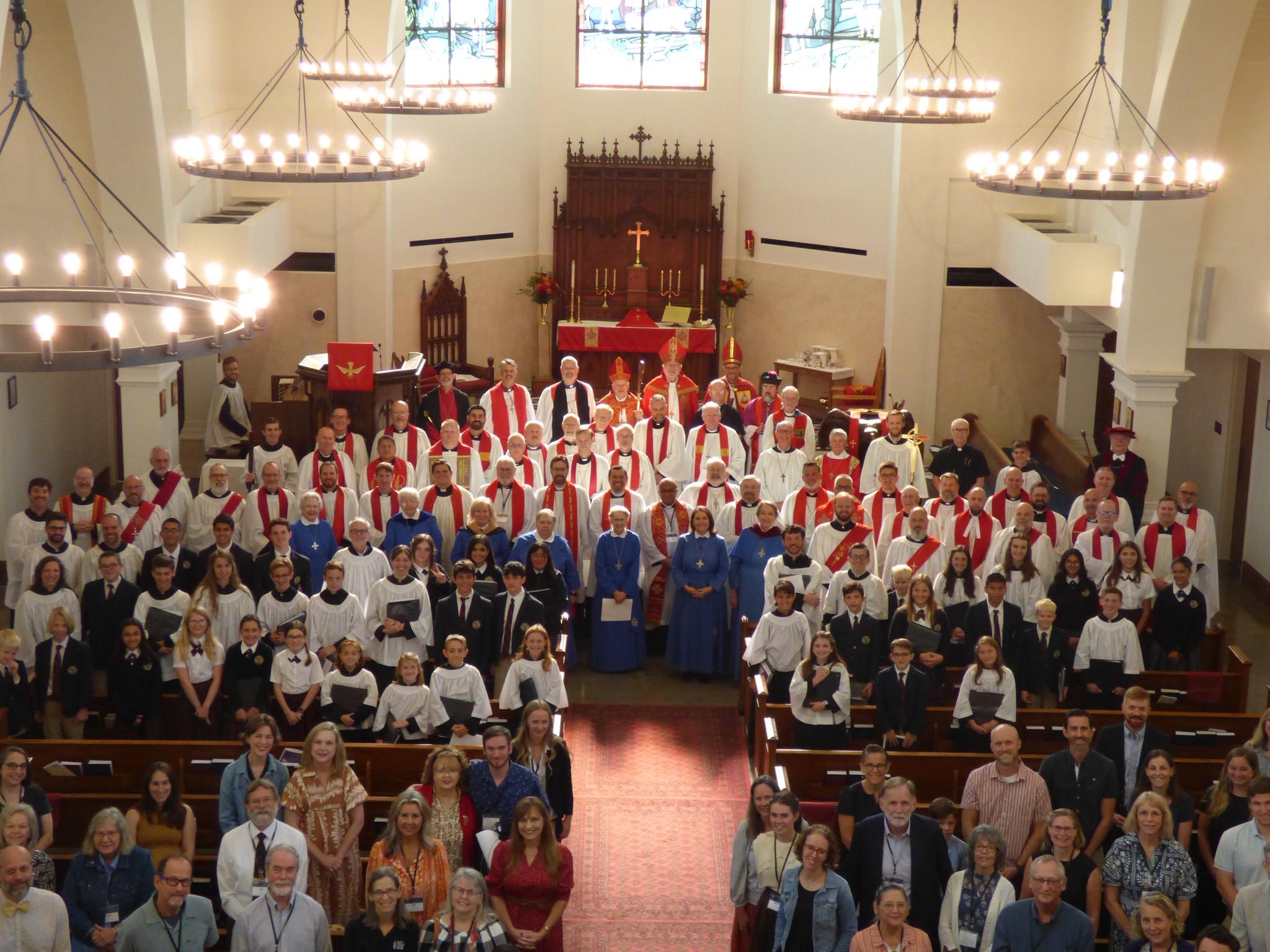
If you’ve ever looked at an Anglican or episcopal organizational chart and wondered how it all fits together, you’re not alone. Words like Synod, Vestry, and Diocese can feel technical or distant. But they describe something deeply biblical and beautifully ordered.
So, what is a Synod?
The Synod: The Church Gathered in Council
The word synod comes from a Greek term meaning “to walk together.” A synod is the broader governing body of a diocese or church jurisdiction. It is where clergy and representatives gather under the leadership of the Bishop to deliberate, guard doctrine, oversee discipline, and direct mission.
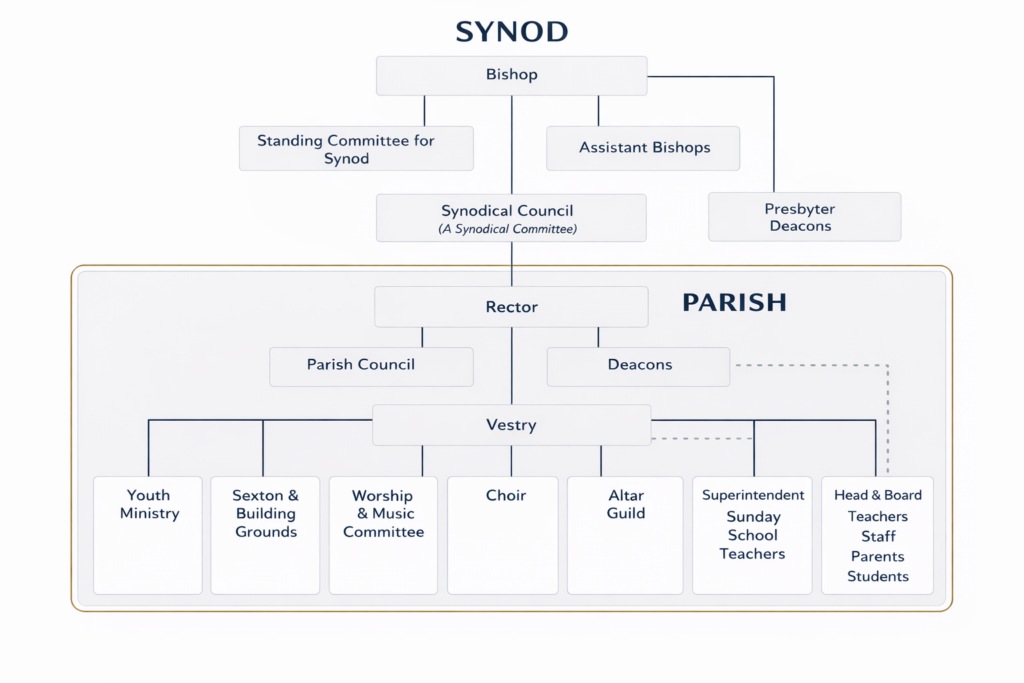
In our structure in the REC, the Bishop (ORDINARY) presides over the Synod. Assisting him are:
- The Standing Committee
- Assistant Bishops
- The Synodical Council
- Presbyters and Deacons
The Bishop serves as chief shepherd and teacher (pastor of pastors), ensuring that the faith once delivered to the saints is faithfully proclaimed and practiced. The Synod protects unity and apostolic continuity.
The Biblical Case for Synod
In the New Testament, Timothy and Titus were given real authority to guard doctrine and exercise discipline (1 Timothy 5:19–20; Titus 1:5). That authority was pastoral and judicial. They were to correct, rebuke, appoint elders, and ensure order in the churches. When a local Presbyter faces a difficult pastoral situation, he is not left alone.
The Apostle Paul makes a distinction between Presbyters and Bishops in the Pastoral Epistles, even though in some contexts the terms can overlap (see Acts 20). Speaking to the Church in Ephesus, in Acts 20:28, St. Paul says:
“Take heed to yourselves and to all the flock, in which the Holy Spirit has made you overseers (episkopoi), to shepherd the church of God…”
Elders govern locally. Bishops oversee regionally. The wider Church gathers in council when necessary (Acts 15 is the clearest example of this synodical principle).
There is an appeal beyond the immediate parish. This plurality reflects the biblical pattern that “in the multitude of counselors there is safety” (Proverbs 11:14).
The Parish: The Church in One Place
Beneath the Synod is the Parish—the local congregation where Word and Sacrament are regularly administered. The bishop is the pastor of every parish in the diocese, but he can’t be in all places at once so he appoints rectors (or priests-in-charge) to lead in his absence.
At the parish level:
- The Rector leads spiritually and pastorally.
- The Deacons assist in ministry and service.
- The Vestry provides governance and stewardship.
- The Laity elect the vestry and contribute time, talent, and treasure.
From the Vestry flow the various ministries of the parish:
- Youth Ministry
- Sexton & Building Grounds
- Worship & Music
- Choir
- Altar Guild
- Sunday School
- Parish School leadership
- Various others like “Pro-Life” etc.
Why This Structure Matters
Anglicanism has always resisted two extremes: unchecked hierarchy and chaotic independence.
A Synod ensures we are not isolated congregations inventing our own theology. A Vestry ensures local responsibility and accountability. A Bishop ensures apostolic oversight. A Rector ensures pastoral leadership.
It also reflects the New Testament pattern—elders (presbyters), overseers (bishops), and deacons working together for the building up of the Church.
Leave a Reply