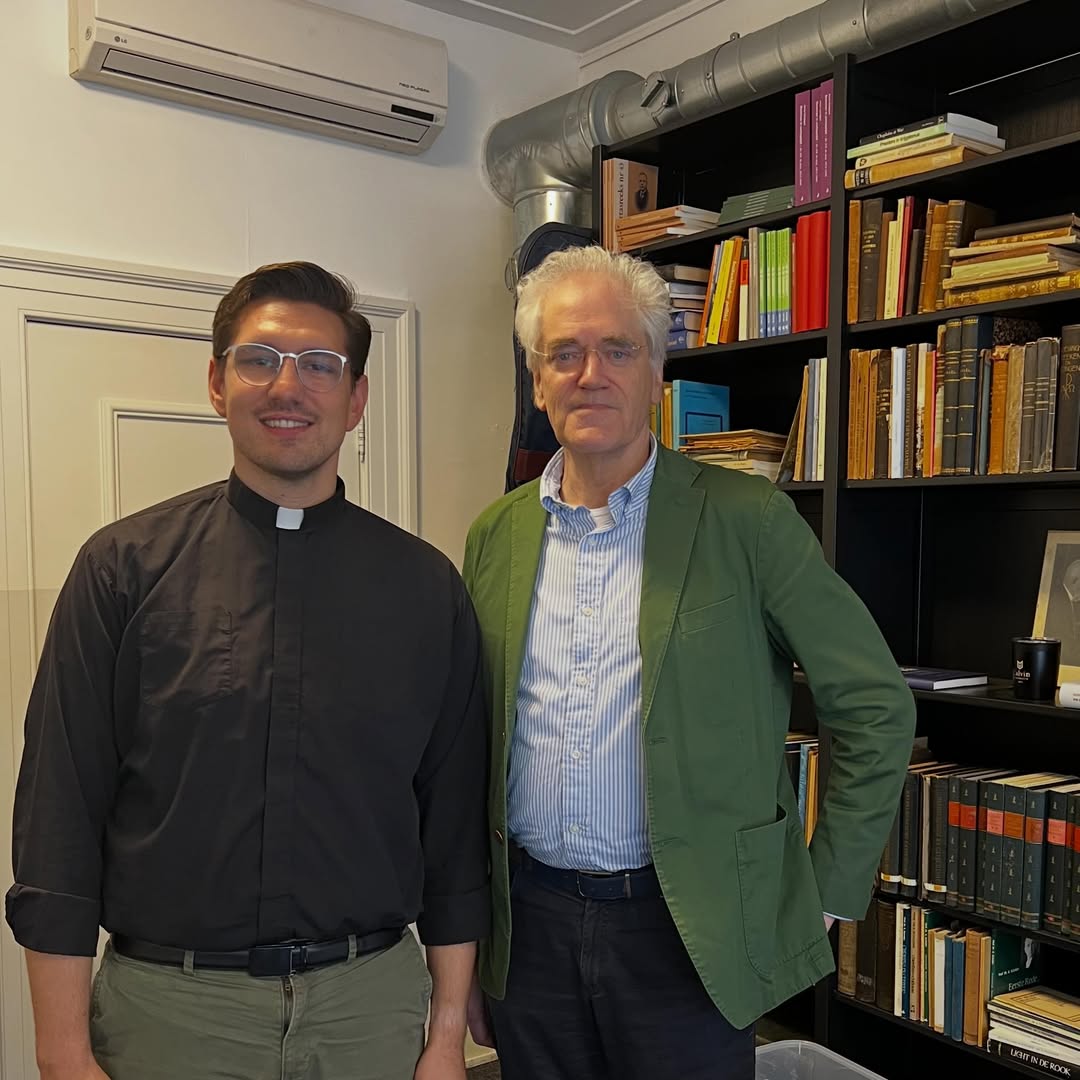
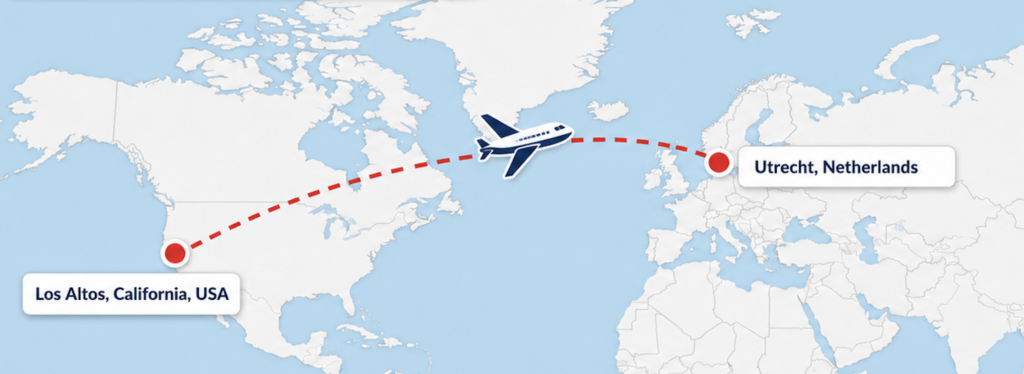
In the end of May, my wife Sarah and I had the privilege of sitting down with Prof. Dr. George Harinck at Theological University Utrecht (where he serves as Rector Magnificus) for a conversation about the Kuyperian legacy and its global future.
For those unfamiliar with his work: Dr. Harinck is one of the most important living historians of the Neo-Calvinist tradition. He has spent his career preserving, interpreting, and extending the international reach of the Kuyperian tradition through the writings of men like Abraham Kuyper and Herman Bavinck at the Neo-Calvinism Research Institute. He was awarded the Calvin University 2026 Kuyper Prize for Excellence in Reformed Theology and Public Life.
We met in his study on the Kromme Nieuwegracht, surrounded by shelf after shelf of Dutch theological volumes, some of which have shaped the way the English-speaking world understands sphere sovereignty, common grace, and the relationship between faith and public life.
We discussed the Kuyperian legacy in the Netherlands and its international influence, how Neo-Calvinism traveled, what it became abroad, and what questions remain open for future research. We also explored opportunities for collaboration. Those conversations are ongoing and there really hasn’t been much work on Kuyper in the Anglican world. I gave a lecture on Kuyper at the Anglican Way Institute a few year back:
I came to Utrecht interested in how confessional Christianity builds institutions, forms culture, and thinks across generations.
As I looked through my notes from my meeting with Harinck, he noted the word pluralism (rather than pillarisation/verzuiling) is a better description for the Kuyperian political ideals. It was also refreshing to have a conversation with an academic critical of Barthian philosophy since so many of our American thinkers are typically pro-Barth.
I shared Dr. George Grant’s story about Hitler fearing Abraham Kuyper’s pastors from Vrije and Dr. Harinck had a number of Reformed pastors that came to mind who were targeted by the Nazi regime because of their Reformed identity.
Dr. Harinck also shared an anecdote about Geerhardus Vos, who was actively recruited by Abraham Kuyper and Herman Bavinck to join the faculty of the Free University in Amsterdam. Vos seems to have been genuinely drawn to the project. In an October 7, 1886 letter to Kuyper, he wrote that “the impulse of undivided sympathy” with the principle represented by the Free University had almost driven him “within her walls,” and that it would have been “an honor and a delight” to serve there.
Yet Vos declined the invitation, largely out of deference to his parents’ wishes, concluding that he must “choose the field of activity assigned to me in America.” He returned to the United States, taught at the Theological School of the Christian Reformed Church in Grand Rapids, and later became Princeton’s first Professor of Biblical Theology.
Leave a Reply