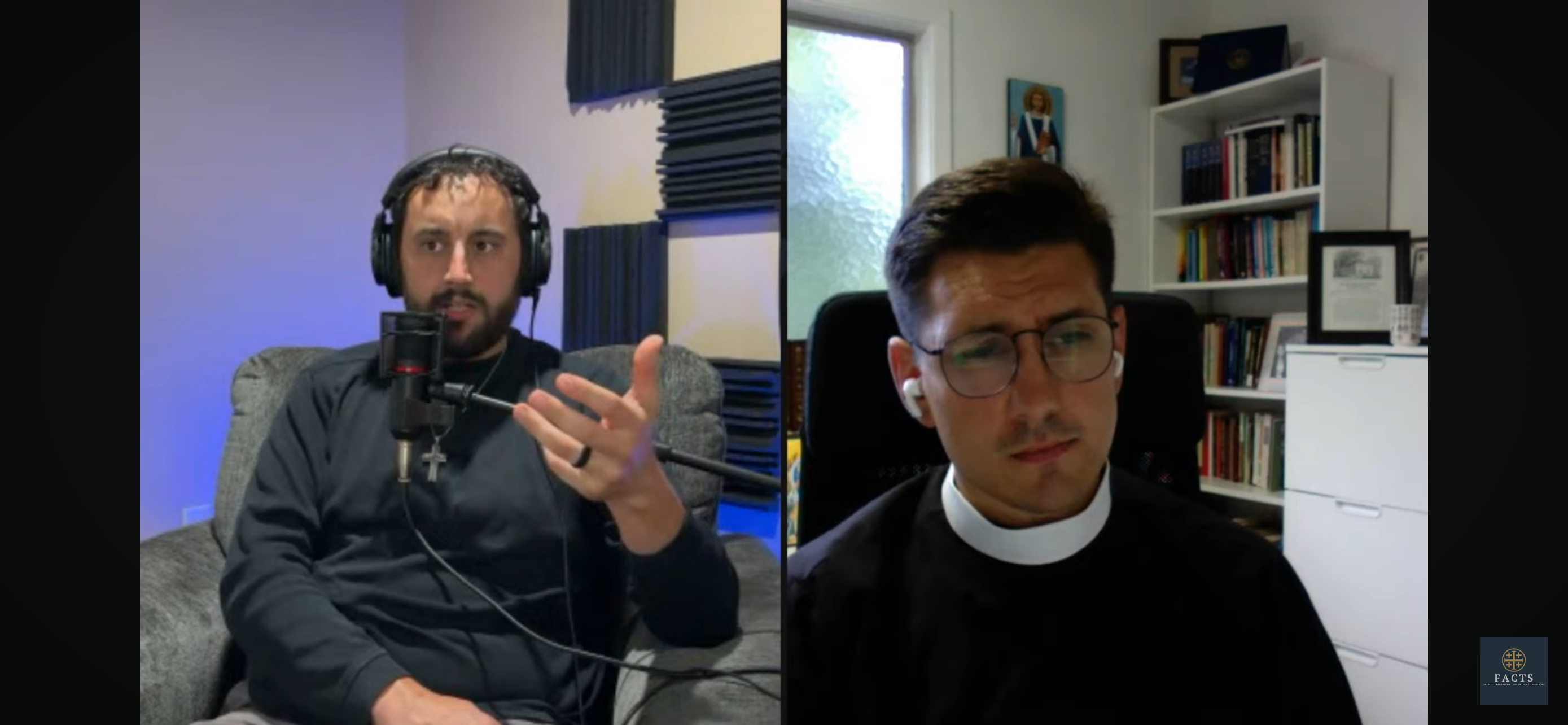
I recently joined Dr. Stephen Boyce on the FACTS podcast to talk about the origins of the Church of (and in) England. Here’s the video, with a recap of what we covered.
Older Than Augustine or Henry VIII
One of the central themes of our discussion was the widespread misconception that the Anglican tradition either began with King Henry VIII or during the late 6th century with Augustine of Canterbury. While these figures are significant in the history of the Church, the roots of Anglicanism run much deeper. St. Paul, St. John, and St. James are all discussed as well as St. Joseph of Arimathea.
The Role of Augustine of Canterbury
We also examined the role of Augustine of Canterbury. Appointed as the first Archbishop of Canterbury by Pope St. Gregory the Great, Augustine’s mission in the late 6th century was a crucial moment in the Re-Christianization of Kent. However, attributing the birth of the Anglican tradition solely to Augustine overlooks the Celtic Christianity that came before him.
Beyond Augustine and Henry VIII
Our conversation then moved to the broader historical context. Before Augustine’s mission, there were already Christian communities in England, influenced by the earlier spread of Christianity across the Roman Empire. These communities had their own practices and traditions, contributing to the unique development of Christianity in England. This deep history is often overshadowed by the more dramatic and well-documented events of the Reformation.
King Henry VIII’s break from Rome was a turning point that led to the Church of England as we know it today, but it was not the beginning of Anglicanism. The theological, liturgical, and political foundations of Anglicanism were laid over centuries, influenced by various reforms and local practices.
About the FACTS Podcast
The FACTS podcast is dedicated to exploring historical and biblical content about the early church Fathers, Apocryphal accounts, the biblical canon, textual criticism, and the scripture itself. Stephen and his team make this history accessible to ordinary listeners.
The conversation was a good chance to challenge some common misconceptions about the Church of England. If you’re interested in church history, biblical studies, or historical theology, I recommend the FACTS podcast.

Leave a Reply